Many Virginia homebuyers assume they can’t afford to own — especially in markets close to Richmond where prices have climbed steadily. But affordability isn’t just about the sticker price on a home. It’s about matching the right loan program to your income, credit profile, and geography.
In Goochland County and the surrounding rural zones, buyers have access to programs that most Richmond-area brokers either don’t offer or don’t actively market. USDA zero-down financing, VA entitlement, and stacked down payment assistance can dramatically shift what’s possible for the right buyer. The challenge is that most people don’t know these options exist until they’ve already talked to someone who doesn’t specialize in them.
This guide walks you through exactly how to calculate what you can genuinely afford in Virginia, which programs can stretch that number further, and how to get a soft pull pre-approval without a hard inquiry hitting your credit. Whether you’re eyeing a property in Manakin-Sabot, Centerville, or out toward Goochland Courthouse, this step-by-step process gives you a real number to work with — not a guess.
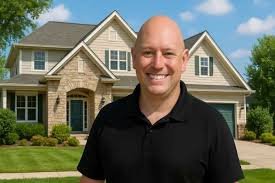
Written by Duane Buziak, NMLS #1110647, mortgage broker at Coast2Coast Mortgage LLC, NMLS #376205.
Step 1: Know Your True Monthly Budget Before You Look at Listings
Before you open a single listing on Zillow, you need one number: your maximum monthly housing payment. Not a range. Not a vague sense of what feels comfortable. A real ceiling based on your income and existing obligations.
Start with your gross monthly income, not your take-home pay. Mortgage underwriters qualify you on gross, so that’s the number that drives your maximum. Your actual budget lives in your net pay, but your qualification ceiling is set by gross. Keep both in mind as you work through this.
The industry standard is the 28/36 rule. Your housing costs — principal, interest, taxes, and insurance (PITI) — should stay at or below 28% of your gross monthly income. Your total debt load, including housing plus car payments, student loans, and credit cards, should stay at or below 36% of gross.
Here’s how that plays out in real numbers. A buyer earning $72,000 per year has a gross monthly income of $6,000. At 28%, the maximum PITI is $1,680 per month. Depending on the loan program and current rate environment, that $1,680 monthly payment supports a purchase price in the $280,000 to $310,000 range on a 30-year fixed. Run your own scenario using the Goochland mortgage calculator to confirm current rate impacts — rates shift, and the math changes with them.
Now layer in Goochland County-specific costs. The county’s real property tax rate is a real line item in your PITI calculation. You can verify the current rate directly from the Goochland County Commissioner of the Revenue. Don’t estimate this — pull the actual number and plug it in.
Beyond taxes, rural buyers often overlook three budget items that can quietly erode your housing headroom. HOA dues, if applicable, are counted in your front-end DTI. Flood insurance is required on some rural parcels and can add meaningfully to your monthly cost. And well and septic systems don’t have monthly utility bills, but they do require maintenance reserves — budget accordingly.
The goal of this step is a single, honest number: the maximum monthly PITI you can support. That number becomes your filter for everything that follows.
Step 2: Pull Your Credit Picture Without Triggering a Hard Inquiry
Your credit profile is the second lever in the affordability equation. It doesn’t just determine whether you qualify — it determines the rate you qualify for, which directly determines how much home you can afford. A 40-basis-point rate difference on a $300,000 loan changes your monthly payment by roughly $70 to $90 per month. Over 30 years, that’s real money.
Before any broker or direct lender pulls your credit for a full application, you should understand what’s in your file. And you can do that without a hard inquiry hitting your report.
Here’s the distinction that matters. A hard pull is the formal credit inquiry required for a full mortgage application — it shows up on your credit report and can temporarily lower your score. A soft pull, by contrast, gives a broker a meaningful read on your file without any impact to your score. It’s used for pre-qualification and program matching before you’re ready to commit to a full application.
At Goochland Mortgage, the process starts with the NoTouch Credit Pull — a soft credit pull mortgage review that gives me a real look at your file before anything hits your report. This is a no hard inquiry mortgage pre approval process: I can see your score range, utilization, any collections, and whether you have the file depth needed for USDA, FHA, or VA qualification. You get real answers without a credit hit.
Why does this matter for affordability specifically? Because if your file has issues — high utilization dragging your score down, a collection that could be disputed, or a thin credit profile that needs a few months of building — you want to know that before you’re under contract on a home. Fixing a utilization problem or disputing an error can move your score enough to qualify for a meaningfully better rate. Understanding your credit score for mortgage qualification in Virginia is a critical first step before any application.
For context on what to look for in your own report, the CFPB’s credit reports and scores resource is a solid starting point. It explains utilization ratios, how collections are treated, and what a thin file means for loan eligibility.
The action step here is simple. Use the Soft Pull Pre-Approval page or call 804-212-8663 to start a mortgage pre approval without hard pull. No credit hit, no obligation, and you’ll leave with a clear picture of where your file stands and which programs you’re positioned for.
Step 3: Match Your Profile to the Right Virginia Loan Program
Once you know your budget ceiling and your credit picture, the next step is matching your profile to the program that gives you the most purchasing power. In Virginia, there are four primary programs — VA, USDA, FHA, and Conventional — and each has different affordability levers. Understanding how these programs compare is one of the most important Goochland home financing strategies available to buyers in this market.
VA Loans: If you have qualifying military service history, a VA loan is almost always the most affordable path. No down payment, no private mortgage insurance, and competitive rates. The absence of PMI alone can save you hundreds per month compared to a conventional loan at the same price point. Check your eligibility at the VA home loan eligibility page. For a Goochland buyer, this is the first question to answer — if you have entitlement available, start here. Learn more at the VA Loans Goochland County service page.
USDA Loans: For buyers targeting rural areas of Goochland County, USDA Rural Development financing offers zero down payment on eligible properties. The Goochland Courthouse corridor and portions of Centerville have historically fallen within USDA-eligible boundaries — but eligibility can change, and you should verify current boundaries using the USDA Rural Development eligibility map before assuming a property qualifies. This is a program most suburban Richmond brokers don’t actively work with. It’s a core part of what we do. See the USDA Loans Goochland County page for specifics.
FHA Loans: FHA is the most accessible path for buyers rebuilding credit or working with limited savings. The minimum FICO for 3.5% down is 580; buyers with scores between 500 and 579 can still qualify but need 10% down. FHA loans carry mortgage insurance premium (MIP) for the life of the loan at lower down payment levels, which adds to monthly cost. Full FHA guidelines are available at the HUD FHA resource page.
Conventional: For buyers with 680 or higher FICO and enough savings for a 3 to 5% down payment, conventional financing avoids FHA’s MIP structure. PMI on a conventional loan cancels automatically once you reach 20% equity — MIP on FHA does not, under most scenarios.
Here’s a concrete affordability comparison. On a $325,000 purchase, USDA zero-down means $0 required for the down payment. FHA at 3.5% down requires $11,375 at closing. That $11,375 difference is cash in your pocket — or cash that can be redirected toward reserves, moving costs, or repairs. For buyers working with limited savings, program selection is a direct affordability decision.
Step 4: Stack Down Payment Assistance to Extend Your Reach
Even if USDA or VA isn’t your path, you may not need to come to closing with as much cash as you think. Down payment assistance programs can dramatically shift the affordability equation by reducing or eliminating the cash-to-close barrier on FHA and conventional transactions.
Two programs worth knowing specifically are Dynamo DPA and Turbo DPA.
Dynamo DPA provides 2.5% or 3.5% assistance and pairs with FHA financing. The minimum FICO is 580, which aligns with FHA’s standard threshold. For a buyer who qualifies for FHA but is short on down payment savings, this program fills the gap.
Turbo DPA goes further. It provides 3.5% or 5% assistance with a 600 FICO minimum and allows a combined loan-to-value (CLTV) up to 101.5%. That means the assistance can cover not just the down payment but also contribute toward closing costs — bringing your out-of-pocket cash requirement to a minimum.
Here’s the math on a real scenario. A $300,000 purchase with FHA financing requires a 3.5% down payment — that’s $10,500. Turbo DPA at 5% provides $15,000 in assistance. The result: the down payment is covered, and depending on negotiated seller concessions and rate structure, a buyer may reach closing with minimal out-of-pocket cash. These are what we call no-out-of-pocket closing options — not “no closing costs,” because costs exist, but structured so you’re not writing a large check at the table.
Important caveats: DPA programs carry income limits, property type requirements, and in some cases first-use requirements. Eligibility varies and these programs are subject to change. The numbers above are illustrative — actual assistance amounts and eligibility are subject to underwriting review.
If you’re working with limited savings and FHA is your likely program, DPA stacking is the conversation to have before you assume a home is out of reach. Visit the Down Payment Assistance Goochland page to see current program details, or call 804-212-8663 to run your specific scenario.
Step 5: Run the Real Numbers — DTI, Rate, and Total Cost
Debt-to-income ratio is the underwriter’s primary affordability test, and it works in two parts. The front-end DTI is your housing payment (PITI) divided by your gross monthly income. The back-end DTI is your total monthly debt obligations — housing plus all recurring debts — divided by gross income. Underwriters look at both, but back-end DTI is the binding constraint for most buyers. A dedicated debt-to-income ratio mortgage guide can help you map your specific numbers before you apply.
DTI limits vary by program. USDA typically targets a 41% back-end DTI guideline, though compensating factors can allow higher. VA doesn’t use a strict DTI cap — it uses a residual income model that measures how much money you have left over after all obligations, which is actually more buyer-friendly in many cases. FHA allows up to 43% back-end DTI with standard approval and up to 50% with strong compensating factors. Conventional loans typically cap at 45% back-end DTI.
Let’s continue with our worked example. The buyer earns $6,000 per month gross and has a $400 per month auto loan payment. At the 36% back-end guideline, total monthly debt capacity is $2,160. Subtract the $400 car payment, and $1,760 per month is available for housing PITI. On a USDA zero-down loan at a 30-year fixed rate, $1,760 per month in PITI supports a purchase price in the $295,000 to $325,000 range depending on the current rate environment. Use the Goochland mortgage calculator to run this with today’s rates — the range shifts as rates move.
Beyond DTI, total cost of ownership is the complete picture. Add property taxes using the current Goochland County rate, a homeowner’s insurance estimate (rural properties with acreage may run higher), and any applicable HOA dues. If the property has a septic system or well, factor in a maintenance reserve even if it’s not a monthly line item. These are real costs that affect whether the payment is sustainable long-term.
The goal of this step is a complete monthly payment figure — not just principal and interest, but the full PITI plus any applicable costs. That’s the number that needs to fit within your DTI limits and your real budget. If it does, you’re positioned to move forward. If it doesn’t, you either adjust the price target, look for a program with a lower payment structure, or revisit the DPA options from Step 4.
Step 6: Get Pre-Approved and Lock Your Position in the Goochland Market
Pre-qualification and pre-approval are not the same thing, and the difference matters when you’re making an offer in a competitive market. Pre-qualification is an estimate based on self-reported information — it carries no verified weight with a seller or listing agent. Pre-approval means a broker has reviewed your actual documents, run your credit, and issued a verified letter. That’s what you need to make a competitive offer. A full walkthrough of the mortgage pre-approval process can help you understand exactly what to expect at each stage.
The process at Goochland Mortgage is designed to protect your credit while getting you to a real answer quickly. It starts with the NoTouch Credit Pull — a soft pull mortgage broker review that identifies your strongest program fit without a hard inquiry. Once you’re ready to make an offer, we move to full pre-approval with a hard pull and verified documentation. You don’t take the credit hit until it’s time to use it.
To compress the timeline, gather these documents before you start: two years of W-2s or tax returns (self-employed buyers need both), recent pay stubs, two to three months of bank statements, and a government-issued ID. Having these ready means your full pre-approval can move quickly once you identify a property.
This no credit hit mortgage application approach — soft pull first, hard pull only when needed — is one of the practical advantages of working with a broker rather than going directly to a bank or retail lender. As a broker, I shop multiple wholesale investors for rate and program fit before committing to a specific loan structure. A direct lender can only offer their own pricing. That distinction matters for affordability.
Ready to start? Use the Soft Pull Pre-Approval page for a no hard inquiry mortgage pre approval, or call 804-212-8663 for a live conversation about your scenario. The soft pull process takes minutes and gives you a real picture of where you stand.
How Goochland Mortgage Compares — Program Depth and Rural Specialty
Being a broker means I shop multiple wholesale investors for rate and program fit on every file. A direct lender offers their own products at their own pricing. For buyers in rural Goochland County — where USDA eligibility is a real factor — that distinction in program access matters significantly. Buyers evaluating their options should understand the key differences between a mortgage lender vs. broker before committing to a path.
Here’s how the options compare on the dimensions that matter most for Goochland County buyers:
| Broker / Lender | Programs Offered | Rural / USDA Specialty | Broker vs. Direct | DPA Options |
|---|---|---|---|---|
| GoochlandMortgage.com (Duane Buziak) | VA, USDA, FHA, Conventional, DSCR, DPA | Yes — active USDA rural specialist, Goochland-specific expertise | Broker (Coast2Coast, 500+ wholesale investors) | Yes — Dynamo DPA and Turbo DPA |
| CapCenter | Conventional, FHA, VA | No active USDA rural specialty | Direct lender | Limited |
| 804Mortgage | Conventional, FHA, VA | Primarily Short Pump / suburban Richmond focus; limited rural | Broker | Some |
| Atlantic Bay / TowneBank | Conventional, FHA, VA | Regional retail; broad shelf but not rural-specialist | Direct / retail | Some |
The practical implication: if you’re targeting a property in or near Goochland Courthouse, Centerville, or other rural corridors of the county, the broker you work with needs to actively understand USDA eligibility boundaries and have a track record of closing those loans. It’s not enough to offer the program on paper — you need someone who works these files regularly.
For more context on the broker versus direct comparison in this market, see the Mortgage Broker Goochland County page.
Your Virginia Affordability Checklist — 8 Questions Answered
Q1: What income do I need to buy a home in Goochland County, Virginia?
There’s no fixed income floor — it depends on the purchase price, loan program, and your existing debt. Using the 28% front-end guideline, a buyer targeting a $300,000 home needs a gross monthly income of roughly $5,500 to $6,000 to keep PITI within standard limits. USDA and VA programs may allow more flexibility depending on the residual income or DTI calculation. The best starting point is running your actual numbers rather than relying on a rule of thumb.
Q2: Can I buy a home in Virginia with no down payment?
Yes, in two primary scenarios. VA loans require no down payment for eligible veterans, active-duty service members, and qualifying surviving spouses. USDA Rural Development loans require no down payment on eligible rural properties — and significant portions of Goochland County fall within USDA-eligible boundaries. Verify current property eligibility at the USDA eligibility map.
Q3: What credit score do I need for a USDA loan in Virginia?
USDA doesn’t publish a hard minimum FICO, but most lenders require a 640 or higher for automated underwriting approval. Scores below 640 may require manual underwriting, which involves additional documentation and stricter DTI review. A soft pull review will tell you quickly where your file stands relative to USDA’s requirements.
Q4: Are there USDA-eligible areas in Goochland County?
Yes. The Goochland Courthouse corridor and portions of Centerville have historically been within USDA-eligible boundaries. Eligibility is determined by property address, not by county line — some areas within Goochland qualify and some do not. Always verify a specific address using the USDA Rural Development eligibility map before assuming a property qualifies.
Q5: How does a soft pull mortgage pre-approval work?
A soft credit pull allows a broker to review your credit profile — score range, utilization, collections, and file depth — without triggering a hard inquiry on your report. At Goochland Mortgage, this is the NoTouch Credit Pull process. You get a real read on your qualification position and program fit without any impact to your credit score. A hard pull is only initiated when you’re ready to move to a full, verified pre-approval for an active offer.
Q6: What is the debt-to-income limit for a VA loan in Virginia?
VA loans don’t use a strict DTI cap the way FHA and conventional loans do. Instead, VA underwriting focuses on residual income — the amount of money left over each month after all debts and housing costs are paid. This model is often more favorable for buyers with higher gross incomes or significant existing debt. That said, most VA lenders prefer back-end DTI under 41%, and higher DTI requires strong residual income to compensate. Review VA’s framework at the VA home loan eligibility page.
Q7: Can I stack down payment assistance with an FHA loan in Virginia?
Yes. Programs like Dynamo DPA and Turbo DPA are specifically designed to pair with FHA financing. Dynamo provides 2.5% or 3.5% assistance at a 580 FICO minimum. Turbo provides up to 5% assistance at a 600 FICO minimum with CLTV up to 101.5%. Stacking DPA with FHA can reduce or effectively eliminate the cash-to-close requirement, depending on seller concessions and rate structure. Eligibility is subject to income limits and underwriting approval.
Q8: How long does it take to get pre-approved for a mortgage in Goochland County?
The soft pull review can be completed quickly — often the same day. Moving from soft pull to a full, verified pre-approval letter typically takes one to three business days once all documents are submitted. Having your W-2s, pay stubs, bank statements, and ID ready before you start compresses that timeline significantly. Delays usually come from missing documentation, not from the review process itself.
Putting It All Together — Your Next Move Toward Ownership
Home affordability in Virginia isn’t a fixed number — it’s a calculation that changes based on your income, credit, program fit, and geography. Buyers in Goochland County have access to programs that most suburban Richmond brokers don’t actively work with. If your target property is outside the Short Pump suburban core, you may have zero-down options that competitors won’t mention because they don’t specialize in them.
Here’s your six-step action checklist to take away from this guide:
1. Calculate your budget ceiling using the 28/36 rule and your actual gross income — include Goochland County property taxes and rural cost factors.
2. Review your credit picture with a soft pull before any hard inquiry hits your report — use the NoTouch Credit Pull to get a real read without a credit hit.
3. Match your profile to the right program — VA if you have service history, USDA if your target property is in an eligible rural zone, FHA or conventional based on your FICO and savings.
4. Explore DPA stacking if you’re short on cash to close — Dynamo and Turbo DPA can shift what’s possible on an FHA transaction.
5. Run full DTI math with your actual debts and a complete PITI estimate — use the mortgage calculator to stress-test the numbers before you’re under contract.
6. Get pre-approved with verified documentation so you can make competitive offers when the right property comes up.
Ready to explore your home loan options in Goochland County? Whether you’re buying your first home, refinancing a rural property, or exploring USDA, VA, or down payment assistance programs, I shop 500+ wholesale investors to find the right fit — with no hard inquiry to start. Call or text me at (804) 212-8663, or visit GoochlandMortgage.com to get started with a soft pull pre-approval today.
Rates, programs, and eligibility requirements are subject to change without notice. This content is for informational purposes only and does not constitute a commitment to lend. All loans are subject to underwriting approval, program guidelines, and applicable regulatory requirements. Not all applicants will qualify. Programs referenced are subject to income limits, property eligibility, and credit requirements. Verify current USDA eligibility boundaries and program availability at time of application.
About the Author: Duane Buziak, NMLS #1110647, is a mortgage broker at Coast2Coast Mortgage LLC, NMLS #376205, licensed in VA, FL, TN, and GA. Ranked #114 on the Scotsman Guide Top Originators list with $51.2M in production, and recognized as VA Broker of the Year 2024–2025 and UWM PRO ELITE 2025. Duane specializes in USDA rural financing, VA loans, and down payment assistance programs for Goochland County and the surrounding Central Virginia market. Learn more about Duane’s background and credentials.