
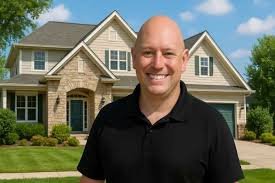
Hanover County sits in a sweet spot that most Richmond-area mortgage brokers overlook. You’ve got suburban growth corridors near Ashland and Mechanicsville on one side, and genuinely rural stretches pushing north and west toward the county’s quieter communities — some of them USDA-eligible. That geography matters when you’re shopping for a mortgage, because the right loan program for a Hanover County home purchase depends heavily on where the property sits and what your financial profile looks like.
A broker who only works conventional and FHA loans is going to leave real money on the table for buyers who could qualify for a USDA zero-down option or stack a VA benefit with a down payment assistance program. This guide walks through seven practical strategies for finding and working with a mortgage broker who actually knows Hanover County’s loan landscape — not just a national call center that happens to be licensed in Virginia.
I’m Duane Buziak, NMLS #1110647, a broker with Coast2Coast Mortgage LLC NMLS #376205, and I work with Hanover County buyers regularly. These strategies reflect what I see working — and what I see buyers getting wrong — in this specific market.
1. Verify USDA Eligibility Before You Fall in Love With a Property
The Challenge It Solves
Hanover County has genuine USDA-eligible rural zones, but the boundaries are not intuitive. Buyers who assume eligibility based on the property’s rural feel — or who assume ineligibility because they’re “close to Richmond” — often get this wrong in both directions. Discovering a property doesn’t qualify after you’re emotionally invested in it is an avoidable problem.
The Strategy Explained
The USDA eligibility map tool is your first stop before any serious offer. Areas near Mechanicsville and the I-295 corridor tend to fall outside USDA-eligible boundaries, while more rural northern and western portions of Hanover County often qualify. The map is updated periodically, so always check the live version — not a screenshot someone sent you six months ago.
Beyond property eligibility, you also need to clear the household income limit. USDA sets income caps by household size and county. You can review the current figures directly on the USDA Rural Development Guaranteed Loan Program page. The income limit applies to all household members, not just the borrowers on the loan — a detail that catches buyers off guard.
Implementation Steps
1. Pull up the USDA eligibility map and enter the specific property address — not just the zip code or general area.
2. Confirm your total household income against the current USDA income limits for Hanover County by household size.
3. If the property sits near a boundary line, flag it to your broker immediately. Boundary lines shift during USDA map updates, and a broker with rural loan experience can help you interpret edge cases and time your application accordingly.
Pro Tips
If you’re touring multiple properties, run each address through the map individually — two houses on the same road can fall on opposite sides of an eligibility boundary. This is exactly the kind of detail a rural-specialist broker catches that a conventional-focused call center misses entirely.
2. Match Your Loan Program to Your Actual Financial Profile
The Challenge It Solves
The first rate quote most buyers receive is often for the wrong program. A broker who defaults to FHA for every buyer with a sub-700 FICO is not doing their job. The difference between landing on the right program versus the default program can mean thousands of dollars in upfront costs and a meaningfully lower monthly payment over the life of the loan.
The Strategy Explained
Each major program has different FICO minimums, debt-to-income tolerance, and down payment requirements. VA loans are available to eligible veterans, active-duty service members, and surviving spouses — and through Coast2Coast, VA scenarios can go to 500 FICO in some cases, with no down payment required and no monthly mortgage insurance. FHA loans require a minimum 580 FICO for 3.5% down, or 500-579 FICO with 10% down. USDA requires the property to qualify geographically and the household to meet income limits, but offers zero down with a lower annual fee than FHA’s MIP. Conventional loans reward stronger credit profiles with competitive pricing but require more down payment without PMI.
Here’s a worked example using a real Hanover County purchase to show what program selection actually means in dollars:
Property: $360,000 home in a USDA-eligible rural zone of Hanover County.
Scenario A — FHA with Dynamo DPA (580 FICO buyer): FHA base loan at 96.5% = $347,400. Dynamo DPA covers the 3.5% down payment ($12,600), so the buyer brings $0 to closing for the down payment. FHA upfront MIP of 1.75% = $6,079.50 financed, bringing the total financed amount to approximately $353,479. Monthly MIP at 0.55% annual = approximately $162/month added to principal and interest.
Scenario B — USDA Guaranteed Loan (same buyer, property qualifies): USDA zero down means the full $360,000 is financed. The USDA upfront guarantee fee of 1.0% = $3,600 financed, for a total of approximately $363,600. The USDA annual fee of 0.35% of the outstanding balance divided by 12 = approximately $106/month — roughly $56/month less than FHA MIP on a comparable balance. Over a 30-year loan, that difference compounds into meaningful savings.
Actual rates, fees, and eligibility are subject to underwriting and current program guidelines. This example illustrates program structure, not a rate guarantee.
Implementation Steps
1. Pull your credit scores from all three bureaus before meeting with any broker — knowing your actual FICO range determines which programs are realistically available to you.
2. Calculate your total household income and check it against USDA income limits if a rural property is on your list.
3. If you’re a veteran or active-duty service member, confirm your Certificate of Eligibility status through VA.gov before assuming you need to pursue FHA or conventional.
Pro Tips
Ask any broker to run side-by-side comparisons of every program you qualify for — not just the one they quote first. A broker with access to USDA, VA, FHA, and DPA programs simultaneously can show you the real monthly payment difference. One who only offers two of those programs cannot.
3. Use a Soft Pull Pre-Approval to Shop Without Damaging Your Credit
The Challenge It Solves
In a competitive Hanover County market, buyers often tour multiple properties before making an offer. If you’re also shopping multiple brokers to compare rates and programs, multiple hard credit inquiries can start to drag your score down at exactly the wrong moment — right before underwriting. Most buyers don’t realize there’s a better way to start.
The Strategy Explained
A soft credit pull mortgage pre-approval lets a broker assess your financial picture — credit profile, income, program eligibility — without triggering a hard inquiry that appears on your credit report. This is what we call the NoTouch Credit Pull process at GoochlandMortgage.com. You get a genuine read on what programs you qualify for and at what loan amounts, without the credit hit that comes with a full application.
A no hard inquiry mortgage pre approval is particularly useful early in your home search, when you’re still narrowing down neighborhoods, running USDA eligibility checks on properties, and deciding whether you’re working with the right broker. You can learn more about how this works at our soft pull pre-approval page and the NoTouch Credit Pull overview.
The CFPB also offers useful context on how rate shopping works and how multiple inquiries within a short window are treated by scoring models — worth reviewing if you’re concerned about the impact of comparison shopping.
Implementation Steps
1. Start with a soft pull pre-approval before committing to a specific property or broker — it gives you program clarity with no credit risk.
2. Use the soft pull results to confirm which programs you’re eligible for, then run USDA and VA eligibility checks on properties you’re seriously considering.
3. Convert to a full application with a hard pull only when you’re ready to make an offer on a specific property and have selected your broker — at that point, the inquiry serves a purpose.
Pro Tips
Not every broker offers a genuine mortgage pre approval without hard pull. Ask directly: “Is this a soft pull or a hard pull?” before authorizing any credit check. If a broker can’t answer that question clearly, that’s a signal worth noting.
4. Choose a Broker Over a Direct Lender — Why It Matters in a Rural Market
The Challenge It Solves
Direct lenders can only offer loans from their own shelf. If their shelf doesn’t include USDA rural programs or a DPA overlay that works for your FICO score, they’ll put you in whatever fits — not whatever’s best. In a county like Hanover, where program eligibility varies by property location and buyer profile, that limitation has real financial consequences.
The Strategy Explained
A broker accesses multiple wholesale lenders simultaneously. At Coast2Coast, that means 500+ wholesale lenders — which means I can shop USDA, VA, FHA, DPA, conventional, and DSCR programs at the same time and match you to the best available pricing and terms for your specific scenario. A direct lender at a retail bank or credit union is comparing their own products internally, not the broader market.
This matters especially for rural Hanover County buyers because USDA and VA programs are not universally available at every retail institution, and the overlays (minimum FICO requirements, property type restrictions, rural designation requirements) vary by lender. A broker who works these programs daily knows which wholesale lenders have the best USDA and VA pricing and the most flexible overlays.
Here’s how the major options in this market compare:
Broker vs. Direct Lender Comparison — Hanover County Mortgage Options
| Provider | Programs Offered | Rural/USDA Specialty | Loan Shelf | Broker vs. Direct |
|---|---|---|---|---|
| GoochlandMortgage.com / Coast2Coast | VA, USDA, FHA, DPA, Conventional, DSCR | Yes — rural Goochland and Hanover County specialty | 500+ wholesale lenders | Broker |
| CapCenter | Conventional, FHA; no-out-of-pocket closing cost model | No prominent USDA rural focus | Own shelf | Direct Lender |
| 804Mortgage | Conventional, FHA primary | Short Pump/West End focused; limited rural/USDA | Own shelf | Direct Lender |
| Atlantic Bay / TowneBank | Broad conventional, FHA, VA; first-time buyer programs | No rural/USDA county-specific specialty | Own shelf (retail) | Direct Lender |
Implementation Steps
1. Ask any broker or lender you’re considering: “How many wholesale lenders do you have access to, and do you actively originate USDA and VA loans in rural Virginia counties?”
2. Verify their NMLS credentials at NMLS Consumer Access before sharing any financial information.
3. If they can’t answer the USDA question with specifics — eligibility map familiarity, rural appraisal experience, USDA conditional commitment timelines — look elsewhere.
Pro Tips
Broker compensation is disclosed on your Loan Estimate, so there’s no mystery about how a broker gets paid. Wholesale pricing often offsets that compensation, meaning broker-originated loans frequently come in at competitive or better pricing than retail direct lenders — especially on government programs like USDA and VA.
5. Stack Down Payment Assistance on Top of Your Base Loan Program
The Challenge It Solves
Many Hanover County buyers assume they need to save for a down payment before they can buy. What they don’t know is that certain DPA programs can cover that down payment entirely — and in some cases, help move toward no-out-of-pocket closing options — when layered correctly on top of an FHA base loan. This is a strategy that a broker with access to wholesale DPA programs can execute; a direct lender with a limited shelf often cannot.
The Strategy Explained
Two DPA programs worth knowing for Virginia buyers are Dynamo DPA and Turbo DPA, both accessible through the broker channel.
Dynamo DPA: Provides 2.5% or 3.5% assistance, requires a minimum 580 FICO, and stacks with FHA. On a $360,000 purchase, 3.5% assistance equals $12,600 — covering the FHA minimum down payment entirely. The buyer’s out-of-pocket down payment drops to zero.
Turbo DPA: Provides 3.5% or 5% assistance, requires a minimum 600 FICO, and allows a combined loan-to-value (CLTV) of up to 101.5%. This is a meaningful distinction — it means the assistance can extend toward closing costs as well as the down payment, moving buyers closer to little to nothing out of pocket at closing.
Revisiting the worked example: the same $360,000 Hanover County purchase with Dynamo DPA at 3.5% covers the full FHA down payment of $12,600. The buyer’s financed amount is approximately $353,479 after the upfront MIP is rolled in, with a monthly MIP of approximately $162. Compare that to a USDA scenario (where eligible) at approximately $106/month in annual fees — the program comparison matters, and stacking DPA is the right move when USDA isn’t available for that specific property.
Confirm current availability, terms, and eligibility requirements with your broker at time of application, as DPA program guidelines are subject to change.
Implementation Steps
1. Check your FICO score against DPA minimums — 580 for Dynamo, 600 for Turbo — before assuming you’re ineligible.
2. Ask your broker to run both the DPA-stacked FHA scenario and the USDA scenario (if the property qualifies) side by side so you can see the real monthly payment difference.
3. Explore the Down Payment Assistance options at GoochlandMortgage.com to understand what’s currently available for Virginia buyers.
Pro Tips
DPA programs are not grants in every case — some are structured as second liens. Ask your broker to explain the repayment structure, any forgiveness provisions, and how the second lien affects your total monthly obligation before committing. A good broker explains this clearly upfront.
6. Gather Your Documents Early — Rural Loans Have Extra Underwriting Steps
The Challenge It Solves
Buyers who’ve only done conventional purchases are sometimes caught off guard by the additional steps that USDA and VA loans require. Property-specific inspections, rural appraisal timelines, and the USDA conditional commitment process add time that a conventional loan doesn’t have. Going in unprepared extends your timeline and can create stress in a transaction that’s otherwise proceeding normally.
The Strategy Explained
USDA loans require a property eligibility confirmation, a rural appraisal (which can take longer than a suburban appraisal due to comparable property availability), and a USDA conditional commitment issued by the Rural Development office before the loan can close. If the property has a well or septic system — common in rural Hanover County — lenders will require inspection and certification of both systems. This is not optional and cannot be waived.
VA loans have their own property requirements. The VA appraisal is conducted by a VA-assigned appraiser, not one chosen by the lender, and VA Minimum Property Requirements (MPRs) must be met. Properties with deferred maintenance, safety issues, or certain structural conditions may require repairs before the VA appraisal clears.
Having your documents organized before you go under contract reduces the time you spend scrambling during an already busy transaction period. Review the VA home loan requirements and USDA program guidelines so you know what’s coming.
Implementation Steps
1. Gather two years of federal tax returns, W-2s or 1099s, 30 days of recent pay stubs, and two months of bank statements before you go under contract — these are required for every loan type.
2. If the property has a well or septic system, budget for and schedule those inspections early — they cannot be done retroactively and can add a week or more to your timeline if ordered late.
3. For USDA loans, ask your broker to explain the conditional commitment step and build that timeline into your contract’s closing date. Rushing a USDA conditional commitment is not productive — it’s a federal review process.
Pro Tips
Self-employed buyers face additional documentation requirements on all loan types — two years of business returns, a year-to-date profit and loss statement, and sometimes a CPA letter. If you’re self-employed and pursuing USDA or VA, flag this to your broker at the very first conversation so they can set accurate timeline expectations.
7. Ask the Right Questions Before You Commit to a Broker
The Challenge It Solves
Not all brokers are equal, and in a market like Hanover County — where the right loan program can hinge on a property’s rural designation or a buyer’s specific FICO and income profile — working with the wrong broker costs you real money. The questions below give you a practical filter before you share financial information or authorize a credit check.
The Strategy Explained
Use these eight questions as your pre-commitment checklist. A qualified, experienced broker who works Hanover County regularly should be able to answer every one of them without hesitation.
Implementation Steps
1. Ask each question directly in your first conversation — phone, email, or in person. Note how confidently and specifically they answer.
2. Verify the broker’s NMLS number at NMLS Consumer Access before proceeding.
3. If a broker hedges on USDA eligibility knowledge, can’t describe a soft pull process, or doesn’t know what Dynamo or Turbo DPA are, treat that as a signal to keep looking.
Pro Tips
Red flags to watch for: a broker who quotes a rate before reviewing your full financial profile; one who can’t explain the difference between a soft pull and a hard pull; one who has never originated a USDA loan in a rural Virginia county. Experience with the specific programs you need is not a bonus — it’s a baseline requirement.
8 Questions Every Hanover County Buyer Should Ask Any Mortgage Broker
Q1: Does Hanover County qualify for USDA loans?
Portions of Hanover County are USDA-eligible under the Single Family Housing Guaranteed Loan Program, but eligibility is property-specific — not county-wide. Areas near Mechanicsville and the I-295 corridor are generally ineligible, while rural northern and western portions often qualify. Always verify a specific address using the USDA eligibility map.
Q2: What is the minimum credit score for a USDA loan in Virginia?
USDA itself does not set a hard minimum FICO, but most lenders and wholesale investors require a 640 FICO for automated underwriting approval. Manual underwriting may be available below that threshold through certain lenders — ask your broker specifically about their wholesale lender overlays.
Q3: Can I use a VA loan to buy a home in Hanover County?
Yes. VA loans are available to eligible veterans, active-duty service members, and surviving spouses for properties in Hanover County. There is no geographic restriction for VA loans the way there is for USDA. Through Coast2Coast, VA loans can go to 500 FICO in some scenarios. Confirm your Certificate of Eligibility at VA.gov.
Q4: What is a soft pull mortgage pre-approval and how does it work?
A soft pull mortgage pre-approval — like the NoTouch Credit Pull at GoochlandMortgage.com — reviews your credit profile without triggering a hard inquiry. It gives you a program eligibility read and estimated loan amount without affecting your credit score. It’s appropriate early in your home search, before you’re ready to make a specific offer. Learn more at our NoTouch Credit Pull overview.
Q5: What is the difference between a mortgage broker and a direct lender?
A broker accesses multiple wholesale lenders and shops your loan across them to find the best fit. A direct lender only offers their own products. In a rural market like Hanover County, where USDA, VA, FHA, and DPA programs all play a role depending on the property and buyer profile, broker access to 500+ wholesale lenders is a meaningful structural advantage.
Q6: Can I stack down payment assistance with an FHA loan in Virginia?
Yes. Programs like Dynamo DPA (minimum 580 FICO, 3.5% assistance) and Turbo DPA (minimum 600 FICO, up to 5% assistance, 101.5% CLTV) are designed to stack on top of FHA base loans. On a $360,000 purchase, Dynamo DPA at 3.5% covers the full FHA minimum down payment of $12,600, bringing the buyer’s out-of-pocket down payment to zero. Ask about no-out-of-pocket closing options as well.
Q7: How long does USDA loan approval take compared to conventional?
USDA loans typically take longer than conventional loans because of the additional USDA conditional commitment step — a federal review issued by the Rural Development office after the lender completes its underwriting. Plan for 30-45 days minimum, and longer if the property has well or septic systems requiring inspection. Build this timeline into your purchase contract’s closing date.
Q8: What documents do I need for a USDA or VA loan in Hanover County?
Core documents for both programs include: two years of federal tax returns, W-2s or 1099s, 30 days of recent pay stubs, two months of bank statements, and government-issued ID. VA buyers also need their Certificate of Eligibility. USDA buyers should be prepared for well and septic inspection results if the property has those systems. Self-employed borrowers add two years of business returns and a year-to-date profit and loss statement.
Your Implementation Roadmap
Which strategy you start with depends on your situation. Here’s how to prioritize:
If you’re a veteran or active-duty service member: Start with Strategy 3 — get a no hard inquiry mortgage pre approval through the NoTouch Credit Pull process, confirm your VA eligibility, and then run property-specific USDA checks if you’re also looking at rural Hanover County homes. VA and USDA can both be on the table depending on the property.
If you’re a first-time buyer with a 580-640 FICO: Start with Strategy 2 to understand your program options, then move immediately to Strategy 5 to explore DPA stacking. The FHA plus Dynamo DPA combination can get you into a home with zero down payment — and if the property qualifies for USDA, that comparison math is worth running too.
If you’re targeting a rural Hanover County property: Start with Strategy 1. Run the USDA eligibility map before you fall in love with a specific address. Then use Strategy 6 to understand the rural loan timeline so you’re not surprised by well/septic inspections or the USDA conditional commitment step.
If you’re self-employed or have a non-traditional income profile: Start with Strategy 6 and get your documentation organized early. Then use Strategy 4 to find a broker with access to the widest possible lender shelf — because self-employed borrowers benefit most from a broker who can shop overlays across multiple wholesale lenders rather than being limited to one institution’s guidelines.
For a Goochland County reference point, the Hanover County government site provides property and assessment data that can inform your pricing expectations as you evaluate specific properties.
Ready to explore your home loan options in Goochland County? Whether you’re buying your first home, refinancing a rural property, or exploring USDA, VA, or down payment assistance programs, I shop 500+ wholesale lenders to find the right fit — with no hard inquiry to start. Call or text me at (804) 212-8663, or visit GoochlandMortgage.com to get started with a soft pull pre-approval today.
Explore our live service pages: VA Loans, USDA Loans, FHA Loans, Down Payment Assistance, Conventional Loans, DSCR Loans, and Soft Pull Pre-Approval for Goochland County.
About the Author: Duane Buziak, NMLS #1110647, is a mortgage broker with Coast2Coast Mortgage LLC NMLS #376205, licensed in VA, FL, TN, and GA. Ranked #114 on the Scotsman Guide Top Originators list with $51.2M in production, named VA Broker of the Year 2024-2025, and recognized as a UWM PRO ELITE 2025 originator with $95.6M in solo production. Duane specializes in USDA and VA loans for rural Goochland and Hanover County buyers. Learn more at the About page.